
Tap the button to copy the confounded emoji 😖
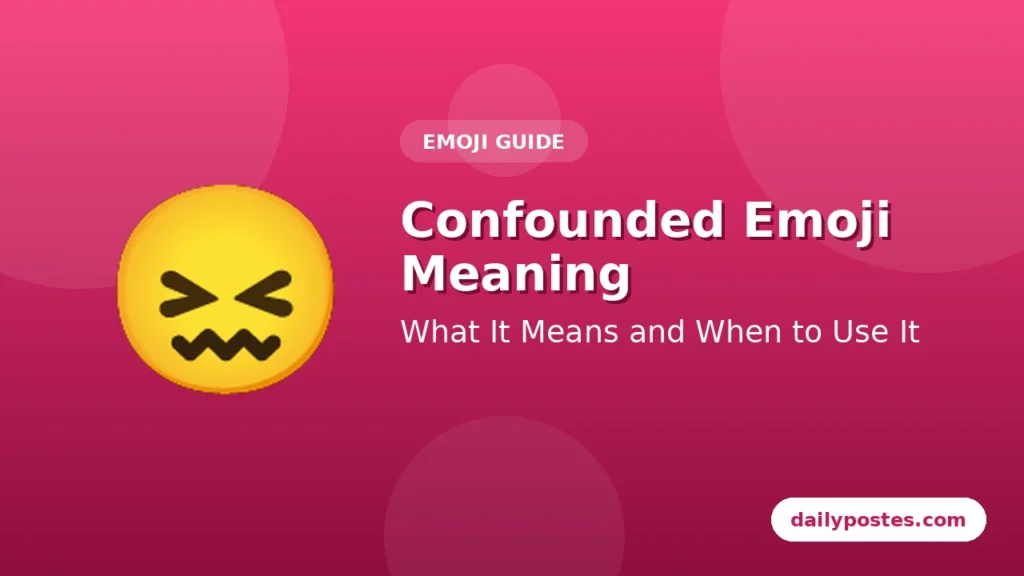
The 😖 emoji is the confounded face, a.k.a. the confounded emoji: squeezed-shut eyes and a wavy, crooked mouth. It means frustration mixed with embarrassment or being flustered. Think “ugh, not again” or “I can’t believe I just did that.” Copy it from the box above.
Quick Facts
| Emoji | 😖 |
| Unicode name | Confounded face |
| Codepoint | U+1F616 |
| Shortcode | :confounded: |
| Introduced | Unicode 6.0 (2010) |
In This Article
- What Does the 😖 Emoji Mean?
- Why Is the 😖 Emoji So Confusing?
- What Does 😖 Mean in Texting?
- When Should You Use the 😖 Emoji?
- What Does 😖 Mean From a Girl?
- What Does 😖 Mean From a Guy?
- What Does 😖 Mean on TikTok and Instagram?
- 😖 vs 😣 vs 😩: What’s the Difference?
- Does 😖 Look Different on iPhone and Android?
- Fun 😖 Emoji Combinations
- FAQs
What Does the 😖 Emoji Mean?
The 😖 emoji is officially called “confounded face.” It shows a yellow face with its eyes squeezed shut and a wavy, crooked mouth. The whole face looks like it is bracing for something unpleasant. Nobody is smiling here. Nobody is crying either. The face is stuck somewhere between annoyance and embarrassment.
“Confounded” is an old-fashioned word that basically means confused and frustrated at the same time. That is exactly what this emoji does. It is the face you make when the printer jams on the last page, when you wave back at someone who was not waving at you, or when your alarm fails on the morning of an important meeting.
Think of the confounded emoji (😖) as the “ugh” emoji. It covers that specific feeling where something went wrong, it is not a tragedy, but it is annoying enough that your whole face twists up about it. A little frustration. A little embarrassment. A little “why does this always happen to me.”
It is quieter than 😡 (pure anger) and softer than 😭 (full drama). 😖 lives in the middle ground of everyday mishaps, the ones that make you groan instead of scream.
Why Is the 😖 Emoji So Confusing?
Honestly, 😖 is one of the most misunderstood emojis around. There are a few reasons for that.
First, the name sounds fancy. “Confounded” is not a word most people use in daily life. It sounds like something from an old novel. So when people see the emoji, the official name does not help them guess the meaning.
Second, the face reads differently for everyone. Some people look at it and see embarrassment. Others see frustration. Some see pain, like the face you make during a bad cramp. A few even read it as disgust. The squeezed eyes and wavy mouth leave a lot of room for interpretation.
Third, it is not super common. Unlike 😂 or ❤️, most people do not use 😖 every day. So when it pops up in a chat, the receiver might have to think twice about what it means. That unfamiliarity creates confusion.
Fourth, it sits between emotions. Is it angry? A little. Embarrassed? Also a little. Tired? Kind of. When an emoji refuses to pick one clear feeling, people get unsure.
The fix is simple: use 😖 for the specific combo of frustration plus embarrassment, and most people will read it right.
What Does 😖 Mean in Texting?
In texting, 😖 does a handful of jobs, all circling the same “ugh” feeling:
1. Small frustrations. “Traffic again 😖.” “My laptop froze during the presentation 😖.” This is the number one use. Annoying things that are not worth crying over.
2. Embarrassment. “I just waved at a stranger 😖.” “I called my teacher ‘mom’ 😖.” The wavy mouth is the face of wanting the ground to swallow you.
3. Being flustered. “Three deadlines today 😖.” When too many things go wrong at once and you are overwhelmed but still holding it together.
4. “Not again” energy. “He cancelled again 😖.” “It started raining right after I washed the car 😖.” The emoji of things repeating when you hoped they were done.
5. Playful cringe. “That plot twist was so bad 😖.” Used lightly with friends when something is awkward or secondhand embarrassing.
6. Self-deprecating humor. “I forgot my own password 😖.” Pointing the “ugh” at yourself so others can laugh along with you.
The common thread: 😖 means something went a little bit wrong, and you are reacting with a wince rather than a scream.
When Should You Use the 😖 Emoji?
Use it when:
- Something mildly annoying happened and you want to share the groan.
- You did something embarrassing and are owning up to it.
- You are flustered or overwhelmed by a pile of small problems.
- Reacting to cringe content with friends, like a bad movie scene.
- You want to keep the tone light while admitting frustration.
Do NOT use it when:
- You are genuinely furious. 😖 is too soft for real anger and will look confusing.
- Someone shares serious bad news. A wince-face can look like you are not taking it seriously.
- The meaning really matters, like apologizing formally. Pick a clearer emoji.
- In professional chats. It reads as complaining, even when you mean it lightly.
Simple rule: save the confounded emoji for small, wince-worthy moments. Big feelings deserve bigger emojis.
What Does 😖 Mean From a Girl?
When a girl sends 😖, context decides, but it usually lands in one of these spots.
She is annoyed at something small. “My phone died right when I needed maps 😖.” This is everyday frustration, and she is just venting. A sympathetic reply works better than advice.
She is embarrassed. “I just tripped in front of everyone 😖.” If she is telling you an embarrassing story, she wants you to laugh WITH her, not at her. Keep it kind.
She is flustered. “Everything is going wrong today 😖.” Multiple small disasters at once. She probably wants comfort, not solutions.
She is playfully cringing. “Did you see that outfit 😖.” Shared cringe is a bonding thing. Join in and it becomes fun.
From a girl, 😖 is almost never romantic and rarely serious. It is venting energy: light, relatable, and usually looking for a little sympathy or a laugh.
What Does 😖 Mean From a Guy?
From a guy, 😖 is the texting equivalent of a loud sigh.
He is frustrated with small stuff. “My team missed an open goal 😖.” Sports, games, tech fails. Guys reach for the confounded emoji when something dumb happens and they need to vent for exactly one message.
He messed up. “I sent the email to the wrong person 😖.” It is a quick way to admit a mistake without writing a whole apology.
He is overwhelmed. “Back-to-back meetings all day 😖.” Not a breakdown, just the mid-week groan everyone understands.
He is reacting to cringe. “Bro, did you watch that interview 😖.” Shared awkwardness, especially in group chats.
Guys rarely use 😖 for deep feelings. It is their low-stakes complaint emoji, and it almost always wants a “haha same” in return.
What Does 😖 Mean on TikTok and Instagram?
On social media, 😖 shows up wherever cringe and secondhand embarrassment live.
On TikTok, you will find 😖 in comments under awkward videos: bad auditions, failed stunts, uncomfortable interviews. It means “I felt that embarrassment through the screen.” It also pops up in POV videos about relatable fails, like texting the wrong person.
On Instagram, 😖 appears under cringe memes and in captions about personal fails. “Monday hit me like 😖.” It is also common in stories, where people react to their own awkward moments in real time.
It is not one of the top-tier viral emojis, which is part of its charm. When someone drops a 😖 in the comments, it feels a little more personal and specific than a generic 😂.
😖 vs 😣 vs 😩: What’s the Difference?
These three get mixed up constantly. Here is how to tell them apart:
| Emoji | Name | Vibe |
| 😖 | Confounded face | Frustrated + embarrassed: the “ugh” wince at small mishaps |
| 😣 | Persevering face | Straining to push through: “hanging on,” enduring difficulty |
| 😩 | Weary face | Tired and fed up: exhausted, “I can’t do this anymore” |
Use the confounded emoji when something is annoying or embarrassing. Use 😣 when you are struggling through something hard but not quitting. Use 😩 when you are drained and done. Quick test: traffic jam = 😖, tough workout = 😣, week from hell = 😩.
Does 😖 Look Different on iPhone and Android?
A little, but the wince comes through everywhere.
On iPhone, the confounded emoji has tightly squeezed eyes that look like little X shapes or angled lines, with a wavy, uneven mouth underneath. It reads clearly as a face bracing against something unpleasant.
On Android and most other platforms, the design is very close: scrunched eyes, crooked mouth, same “ugh” energy. Some versions make the mouth wavier, which leans harder into the embarrassment side.
The wavy mouth is the key feature. Whatever the platform, that crooked little mouth is what separates 😖 from plain anger or sadness.
Fun 😖 Emoji Combinations
Pair 😖 with other emojis to sharpen the message:
| Combo | What it suggests |
| 😖🙈 | Embarrassed beyond words: cannot even look |
| 😖💀 | Cringe so bad you “died” |
| 🤦😖 | Full facepalm energy |
| 😖🔁 | “Not again”: the repeat offender of bad luck |
| 😅😖 | Nervous embarrassment, laughing it off |
| 😖🚗 | Traffic rage, the light version |
| 😖📱 | Phone problems (dead battery, cracked screen) |
| 😖🤷 | Resigned confusion: “I don’t even know” |
More Frustrated Emojis to Copy and Paste
Tap any emoji to copy it instantly, then paste it anywhere you like.
Tap any emoji to copy it. Paste it anywhere: WhatsApp, Instagram, TikTok, or your messages.
People Also Ask About the Confounded Emoji
What is the 😖 emoji officially called?
Its official Unicode name is “confounded face” (codepoint U+1F616). It was added in Unicode 6.0 back in 2010.
What does 😖 mean?
Frustration mixed with embarrassment or being flustered. It is the emoji of small mishaps, awkward moments, and “ugh, not again.”
Is 😖 the same as 😣?
No. 😖 (confounded face) is about frustration and embarrassment. 😣 (persevering face) is about straining through difficulty. They look similar but mean different things.
When should I use 😖?
For mildly annoying or embarrassing moments: small fails, awkward stories, everyday frustrations. Keep it light.
What does 😖 mean from a girl?
Usually she is venting about something small, sharing an embarrassing story, or reacting to cringe. It is light energy, not a serious complaint.
How do I type the confounded emoji?
Open your emoji keyboard and search “confounded” or “frustrated.” In Slack or Discord, type the shortcode :confounded:.
Conclusion
The confounded emoji (😖) is the unsung hero of small disasters. Life is full of moments that are too minor to cry over and too annoying to ignore, and that is exactly where the confounded face shines.
Use it when you are mildly frustrated, a little embarrassed, or just flustered by the day. It turns a groan into something shareable, and sometimes a shared groan is all you need.
Want more? Explore Smileys & Emotion and Faces & Expressions for more emoji guides, or learn about DailyPostes.